Showing posts with label Astro-Lesson. Show all posts

Tuesday, June 21, 2011

Astro-Lesson: Summer Solstice

The Sun as it appeared just a few minutes before today's solstice occurred. (Credit: NASA/SDO)

As of 17:16 UTC (1:16 p.m. Eastern US time) today, June 21, 2001, the Sun will reach the furthest north of its travel across the sky. This event is known as the summer solstice in the north, and consequently has the most daylight of the year. In the southern hemisphere, it would be the winter solstice and the shortest day.

The summer solstice is generally used to either mark the beginning of summer or the midpoint, neither is really right or wrong. Seasons are kind of an abstract notion as it is. But from this point on, the remaining days of the year will get slightly shorter until we reach the winter solstice on December 22.  But, that doesn't necessarily mean cooler days, as anyone who has experienced the month of August knows. (And again, for all of those in the southern hemisphere, just the opposite is true.)

Solstice and Equinox. (Credit: NASA)

What causes this change in seasons has everything to do with the tilt of the Earth. The distance of the Earth from the Sun has nothing to do with it, though I know many people who have been incorrectly taught so or envision it this way because the Earth's orbit is slightly oval. In fact, for the northern hemisphere, summer occurs when the Earth is furthest away from the Sun. And if distance were the cause, then both hemispheres would have the seasons at the same time.

What really happens is that the Earth appears to "wobble" around the Sun on its tilted axis. And because one hemisphere is pointed tilted more towards the Sun due to this wobble, it gets more direct sunlight and longer days. This happens until the Sun reaches a certain number of degrees (currently 23° 26′ 16″) north or south of the equator, and then the Sun appears to travel back across the sky to the next point. These lines at north and south are known as the Tropic of Cancer and Tropic of Capricorn, respectfully. And tracing the Sun's path between these two points, every day at the same time, leads to the formation of a figure-8 pattern called an analemma.
Solar Analemma over Athens, Greece. The lowest point is on the winter solstice, the highest is the summer, the crossings are the spring and fall equinoxes. (Source)

Anyways, I hope you have enjoyed the longest day of the year hear in the northern hemisphere. It tends to be a well celebrated day all around the world, and has been since ancient times. Sites like Stonehenge and the ruins of ancient cultures, like the Greeks and Mayans and Egyptians, all have indications of marking the importance of the summer solstice. It's an astronomical event!


Thursday, May 19, 2011

Astro-Lesson: Supernova

This week is going to be about one of the most massive explosions in the Universe: Supernova. Last week, when discussion the star life cycle, I had mentioned supernovae* briefly as an outcome of the death of super massive stars. But that is only one kind of supernova, there happens to be two types which are further subdivided.
 *The plural of supernova is supernovae.

So, get ready to learn a little bit about supernovae and some see some awesome pictures.

The Crab Nebula, the remnant of a supernova recorded by Chinese astronomers in 1054. (Credit: NASA)

A supernova is an extremely luminous explosion of a star with a burst of radiation that often briefly outshines the entire galaxy in which the star resides. It can take several weeks or months for a supernova to fade, over this time it can emit as much energy as the Sun over its whole life span. The explosion expels most, if not all, of a star's matter into space, creating a shock wave. The shock wave sweeps up dust and gas from the star an the interstellar medium, creating at supernova remnant. These remnants are usually what you see in images from the Hubble Space Telescope and other telescopes.

Supernova 1994D (the bright 'star' on the bottom left) in Galaxy NGC 4526. (Credit: HST/NASA/ESA)

The word nova means "new" in Latin, referring to what appears to be a bright new star in the night sky. Occasionally these explosions cause what appears to be a new star in the sky. The prefix 'super-' separates a supernova from an ordinary nova, which also involve a star increasing in brightness, though to a lesser extent and through a different mechanism.
 
Types of Supernova: there are two basic types of supernova, and a couple of other distinctions:

Illustration of different ways a supernova is formed. (Source)

Type Ia: These result from some binary star systems in which a white dwarf absorbs matter from a companion. (What kind of companion star is best suited to produce Type Ia supernovae is hotly debated.) The idea is that so much mass piles up on the white dwarf that its core reaches a critical density that results in an uncontrolled fusion of carbon and oxygen, thus detonating the star.

Type Ib and Ic: These ones look similar to Type Ia when looking at their spectrum, but are distinguished because they lack certain different lines of spectra. The lack of spectra means that elements in the core may have been lost due to other means, and in general Type Ib/c may be referred to as stripped core-collapse supernovae. These types of supernova are also incredibly rare, and their sources might also be the progenitors of gamma ray bursts.

The onion like layers of a star's core before going supernova.

Type II: A common supernova type, usually found in the spiral arms of galaxies and not in elliptical galaxies, they are distinguished by the presence of hydrogen in their spectrum. These are known to be caused by the rapid collapse and violent explosion of a massive star. There exists several subcategories of Type II supernova, including II-L, which has a steady, linear decline in light over time; II-P which has a slower decline (a plateau) followed by normal decay; IIn, the "n" denotes narrow, which have narrow hydrogen emission lines in their spectrum (probably caused by blue variable stars); and IIb, which initially resembles a Type II supernova but later has a spectrum resembling Type Ib.

A different image of the Crab Nebula, a composite image of the radiation in the nebula's core region. A pulsar (a type of neutron star) can be seen near the center, pushing out jets of particles. (Credit: NASA/HST/CXC/ASU/J. Hester et al.)


Those are the general types of supernova known to astronomers. After the explosion the cores are left behind and usually create a neutron star or a black hole. Supernova are pretty rare events in a galaxies, the Milky Way experiences one about every 50 years, though the last one seen from Earth was in 1604. This last one was known as Kepler's Star and was easily visible in the night sky, brighter then all the planets except Venus. It was visible during the day for over 3 weeks.

False-color of the remnant of SN 1604 (Kepler's Star). (Credit: HST/NASA/ESA)

There are several large candidates in the Milky Way that might go supernova in the next million years, these stars include VY Canis Majoris, Betelgeuse, and Eta Carinae. Once these stars explode, they will provide a vital part in stellar evolution. Supernova explosions are the source of many heavy elements including uranium and plutonium. All of these elements get shot out into space and form clouds of dust that eventually condense and form new stars, or the shock wave can trigger star formation in an already present cloud. This is likely the cause of formation for our own star. This includes the Earth and us. We owe our existence to these violent explosions, the death of a star. As Carl Sagan would say, "We're made of star stuff."


Thanks for reading! This was my 100th post on this blog. It hardly seems like it, I only started back in February. I really have enjoyed writing these posts for my readers, and I enjoy the feedback. I hope you have learned some new things about astronomy from what I've written, or at least enjoy the pictures. I think supernovae are a good way to celebrate. Thank again for reading and I plan to continue this for as long as I can.


Tuesday, May 10, 2011

Astro-Lesson: The Star Life Cycle

This week's topic kinda picks up from last weeks topic, the Sun. From our short and limited view of the cosmos, we have been able to discern something amazing, the life cycles of stars. It turns out stars have a birth, then long lives of constant work converting hydrogen to helium and other elements, and then they die, either by withering away or massive violent explosion.

Art of the life of a Sun-like star.
 There is a significant reason why knowing this is important. A star can last for BILLIONS -- or even TRILLIONS!-- of years, and yet humans have only been around for about 200,000 years, but a brief moment of any star's life. But if it isn't possible for us to observe the entire life span of a star, how have we figured it out? Well, there are lots of stars out there, of all different ages that show features that relate to other stars, this allows us to work with something to make a model out of.

The best analogy I can provide is this: Imagine being in the woods, deep in a seemingly infinite forest that stretches to the horizon. You are surrounded by trees, while you are stuck to a tree yourself, the only one that you can see up close. Your tree appears to be a sturdy adult tree, analogous to our Sun. Looking out into the forest you see a variety of trees; without knowing the life cycle of the tree, they may not seem otherwise connected. You have seeds on the ground, saplings sprouting up, small trees, big trees, really big trees, and rotting logs on the ground.

Sagittarius Star Field - Our Forest.

This analogy can go further; those rotting logs provide subsistence for the next generations of trees, much like supernovae provide matter for new stars. And occasionally you might hear the crash in the distance of a tree falling, much like a supernovae or gamma ray burst going off. And what lies beyond the horizon remains a mystery since you are tied to one tree, just like massive size of the Universe.

Now the trick is, you have only a minute to gaze out into this forest to try discern what is what. And that brings the analogy home with what humanity has been able to accomplish. In our brief glimpse, we have been able to identify saplings, healthy full-grown trees, various species of trees, and dying or dead trees, of course in stellar terms. So lets now look at a few of these stages of the life of a star.

Concept art of the birth of a star in a molecular cloud. (NASA)

Protostar: This is where a star begins to form. A molecular cloud or nebula of dust and gas that starts "clumping" together. As the atoms gather, their gravitational attraction pulls in more atoms, making a larger "clump". This process is known as accretion. Lots of reactions happen inside an unstable protostar, which can have influences on a possible planetary system. Once the protostar achieves and maintains equilibrium, balance between gravity pulling atoms toward the center and gas pressure pushing heat and light away from the center, it becomes a star.

Not all stars are born equal! Stars are born into a variety of sizes and colors, depending on their composition, mass of formation nebula, and temperature. These stars lead vary different lives, of varying length, and die in dramatically different ways.


Small-Medium Stars: The overwhelming majority of stars, at least in the Milky Way, fall into this category, including the Sun, up to 1.5 times the mass of the Sun. These are amongst the longest living stars, the Sun is predicted to last 14 billion years, and it is roughly 4.6 Billion years old now. Smaller stars than the Sun can last billions of years longer. The smaller a star is, the longer it will live.

Hertzsprung–Russell diagram, commonly used to classify stars.

The majority of the life of a star will take place during a phase called the main sequence. This is when the star fuses hydrogen to produce helium in high-temperature and high-pressure reactions near the core.

After a small star like the Sun burns up all of its hydrogen, it leaves the main sequence. It begins to burn helium instead, converting helium atoms into carbon. The star loses its previous equilibrium, so in order to maintain it and keep cool, the star 'puffs out.' The star is now called a red giant, and is the first step in old age. The Sun may expand out to roughly the distance of Earth, 250 times its current size!

A red giant is very unstable, and may expand and contract, these stars are known as variable stars. This period if very short, only lasting a couple million years over the billions of years in a star's life. Soon the helium will burn up and and the star will again change as it switches to the last phase of fusion -- carbon burning.

The Cat's Eye Nebula is a planetary nebula. (NASA)

When a star switches to fusing carbon, the core contracts inward, down to about the size of the Earth. The outer layers of a star are blown off into space into a planetary nebula. Often beautiful to see from Earth, these are the dying throws of a star. The star becomes a white dwarf, densely packed, but not massive enough to become an neutron star or black hole. A white dwarf burns slowly and will gradually fade into a black dwarf, a cold dark mass. However, the Universe is not old enough for any black dwarf stars to exist yet.

A VERY Giant Star (the biggest known)

Huge and Giant Stars: These are stars much more massive then the Sun, with drastically shorter lifetimes. There are two classifications here based on the predicted end results of the star. Here we will call a star that is between 1.5 to 3 times the mass of the Sun a huge star; and a star greater than 3 times the mass of the Sun will be a giant star.

These stars spend a relatively brief period on the main sequence, since they are larger and burn hotter, they burn their hydrogen quickly. When they begin helium burning, they enter a special sort of phase, they become red supergiants, the largest known stars in the Universe by volume.

The onion-like layers of a massive star just before core collapse. (Not to scale.)

These stars are so large, they begin to fuse elements in an onion like structure near the end of their lives. Fusion of elements all the way up to iron on the periodic table is possible before a core collapse. The core of the star essentially is unable to support its weight against gravity. A massive explosion then occurs, a supernova, which violently blasts the upper layers of the star into space, leaving behind the core.

One of two things happens to the core: If it was a huge star, the core becomes a neutron star. If it was a giant star, it becomes a black hole. You can read more about black holes and neutron stars in one of my older articles.

The Crab Nebula, the remains of a supernova first observed around 1050 AD.

Tiny Stars: A special case in stellar physics, these are stars smaller then 0.5 times the mass of the Sun. These stars never fuse helium into higher elements, they do not have the mass to exert the pressure on the core. They are known as red dwarfs, like Proxima Centuri. These stars can exist on the main sequence for up to trillions of years and have life spans longer then when the Universe is predicted to end. They may eventually fade to white dwarfs, but there is no real way of knowing.

That accounts for an overview of star life cycles. I hope this helps you to understand some of the differences between stars and their end results. Astronomers were able to piece this together looking at the clues that the Universe has given us, from our brief glimpse. We have been able to determine the amazing course of existence for the very things that gave us life.


Wednesday, May 4, 2011

Astro-Lesson: The Sun

So this weeks lesson is about the Sun. Our home star is the very thing that makes life possible here on Earth. At a mere 93 million miles away in the center of our solar system, the Sun dominates our sky. By comparison, the next closest star, Proxima Centauri, is just over four light years away. The warmth of the Sun's glow provides a climate on Earth perfect for life. It's closeness also makes it the easiest and best studied star in the Universe.

The Sun as seen from Earth's surface. (Wiki)

For as close and well studied as the Sun is, we still still don't know a whole lot. But astronomers are working hard on it every day. In fact, knowing that we don't know things about the Sun is helping us to look harder for more and more answers. But, what we to know is simply amazing. The Sun is a dynamic changing body, the intricacies are beautiful when seen, and the power is awe inspiring.

Our Sun is a middle-aged yellow dwarf star, designated as a G V star. The Sun is approximately 4.6 billion years old, with about 6.3 billion left. There are some misnomers in calling it a yellow dwarf. The first is that the Sun isn't actually yellow, it emits white light. The Sun is also huge, it makes up 99.86% of the mass of the Solar System and has a diameter of 1.4 million kilometers, that's equivalent to 109 Earths lined up side by side. Volume-wise, the Sun is 1.4 x 1027 cubic meters, big enough to fit 1.3 million Earths inside with room to spare.

Our Sun is a Yellow Dwarf.

When compared to other stars, the Sun is tiny next to the largest known stars. VY Canis Majoris has an upper limit of more then 2,100 times the size of the Sun, it's surface would extend out past the orbit of Saturn. Other estimates say VY Canis Majoris is smaller, but the surface would still extend out around the orbit of Mars. But these huge stars are really rare, in fact, small stars dominate the cosmos and it is now known that the Sun is larger than 80% of stars in the Milky Way. For a long time people have been saying the Sun is an average star, but it is anything but that, only about 10% of stars are like the Sun.

Another unique thing about the Sun is that it is a Population I star, meaning it is metal-rich. (In astronomy jargon, anything that isn't hydrogen or helium is called a metal, it makes little sense, but it makes the universe sound more awesome.) These metals were seeded by the shockwaves of nearby supernovae that triggered the formation of the Sun. The other classification is Population II stars, which are metal poor, but more on that another time, I am thinking of doing star classifications next week.


All these metals, like carbon and oxygen, make up a whooping less the 2% of the Sun's mass. Three quarters of the mass is hydrogen, and the remainder is helium. Hydrogen is the simplest and most common element in the Solar System, as well as the Universe. Inside stars like the Sun, fusion takes place that creates helium and heavier elements up to iron. Everything heavier then iron needs a supernova-type event to be created.

Needless to say, the Sun is also extremely hot. As fusion takes place it generates a lot of heat that gives the Sun life. Its surface (photosphere) temperature is roughly 5800 K based on measurements. Other layers vary in temperature, and are harder to study since we cannot see into the Sun, but modelling suggests the core of the Sun is a roaring 15,000,000 K. Not an ideal place to spend summer vacation.

Earth to Sunspot size comparison. (Source)

This heat and pressure causes the matter that makes up the Sun exist in the fourth state of matter, plasma. The plasma flows along magnetic fields that weave complexly through the Sun. The hot plasma rises to the surface and creates a boiled look on the surface of the Sun, a granulated texture, and as the plasma cools, falls back into the Sun. Often a large region becomes isolated because of the magnetic fields, and as the plasma in this region cools, it appears darker then the surrounding area. These are sunspots, and although cool regions they are still a blistering 3700 K. Many are as big as Earth!

Solar Prominence with Jupiter and Earth for comparison. (Wiki)

Sometimes these magnetic fields snap out into space an draw plasma along in arcs and lines. When looking at the chromosphere of the Sun through a safe telescope, these appear as filaments and prominences. If they break away from the Sun, they become known as solar flares, small plasma storms that fling out into space. These can potentially be hazardous to Earth, but our magnetic field protects us from most damage. The magnetic activity that causes sunspots and flaring is cyclic, running about 11 years, and we are currently heading into a peak.

Cartoon of the formation of CME, once the center point, it pushes out the CME. (NASA)

There is another type of storm that comes from the Sun, known as a coronal mass ejection, or CME for short. These are a lot larger and potentially more dangerous. These originate in one of the Sun's outer layers, the corona, and are massive blast of the solar wind, light plasma, and electromagnetic radiation. These are caused by similar magnetic activity to that which causes solar flares, but on a much more massive scale. They happen often and generally are not dangerous, but occasionally large and powerful ones can occur. These large CMEs are capable of disrupting communications and power networks on Earth.

Image of a CME launching from the Sun. (NASA)

The CMEs and flares are propagated throughout the Solar System on the solar wind. The solar wind is made up of charged particles ejected from the Sun. Their high kinetic energy allows them to escape the gravity of the Sun. The solar wind is generally what causes aurora and the plasma tails of comets. It exerts a slight push, since the wind has a mass.

I like that this image already has all the info in it already and I don't need to make a caption... oh..

The wind inflates a vast bubble around the Solar System in the interstellar medium. This bubble is known as the heliosphere, and is the out-most atmosphere of the Sun. (Yes, you reside in the Sun's atmosphere.) The edge of this is currently being studied to build a fuller model of our Sun. Currently, the Voyager probes are crossing the boundary into interstellar space, which appears to be just inside of the Oort cloud which surrounds the Solar System.

The idea of making a model of the Sun seems like an easy thing to do, but as astronomers have learned more about the Sun, the more questions arise. It is incredible complex, and we have very little understanding of the Sun's interior. One of the most ambitious projects I heard about when I studied astronomy was building a simulation from the surface of the Sun to the edge of interstellar space. It isn't a thing that has been done yet, and the computational power may not even be available. It would have to cover over 13,463,808,363 km.

What our Solar System might look like on the outside. (NASA)

I hope you now have a much better understanding of our closest star, the Sun. More is being learned about it all the time. Several observatories are working on studying solar storms and perhaps ways to predict them so we can be prepared when they hit. We also learn more about the origin and composition of our home. It is also important to understand that the Sun is changing over time, and is getting hotter. We can study to understand the future of the Sun, and its affects on the Earth (spoiler alert: all life on it will die).

Additional Reading and Sources:


Tuesday, April 26, 2011

Astro-Lesson: Asteroids

So the poll was a tie between the Sun and asteroids. I just picked asteroids, and will do the Sun next week while I think of new topics to populate the poll. Honestly, I might go back to the question and answer format I did when I started the blog, at least temporarily. It's funny though, even though I've been wanting to do the asteroids, I am having some problems on thinking of how to get started...

Artist Concept of the Asteroid Belt. (NASA)
Astronomers have been studying asteroids for a couple hundred years. The first asteroid discovered was Ceres, in 1801. Now there are over a million asteroids that have been observed flinging like crazy throughout our Solar System. It is estimated nearly 2 million asteroids 1 km or larger reside in the asteroid belt, a region of space between Mars and Jupiter, but other significant populations include Near-Earth asteroids (NEAs) and Trojans. They are left over remnant from the early Solar System and can say a lot about the composition of those early conditions.

The asteroid belt is incredibly diffuse, where spacecraft can fly through it without worry of hitting anything, unlike what may be portrayed in science fiction. The asteroid belt also isn't likely to have been a planet that never formed or got ripped apart by Jupiter, the total mass off the asteroid belt is less than that of our Moon. Collisions do happen between asteroids though, spawning more smaller asteroids, and because they share orbital characteristics and make up, they are grouped into "families." The characteristics of each family also casts doubt on the possibility of planet formation.

Vesta (left) and Ceres (middle) compared to the Moon (right). (NASA)
The largest and  most massive object in the asteroid belt is the dwarf planet Ceres. For a half a century after it was discovered, it was considered a planet, along with the asteroids Pallas (discovered 1802), Juno (1804), and Vesta (1807). No new asteroid would be discovered for nearly 40 years. With the discovery of more, the term planet fell out of favor (no vote or decision was needed like in the case of dwarf planets.) Asteroid had been used interchangeably with planet to describe these objects from the beginning, and took over to describe these "minor planets." Asteroid literally means star-like, because of the objects initial appearance in telescopes was like that of a star, except they moved like planets.

The Asteroid Belt (white) and Jupiter's Trojans (green). (Wikipedia)

Trojans are populations of asteroids that share an orbit with a larger planet or moon, but do not collide with it because they orbit in one of the two Lagrangian points of stability, L4 and L5, which lie 60° ahead of and behind the larger body. The largest group of these are the Jupiter Trojans, which, though few are currently known, may be as numerous as the asteroid belt. Trojans are also found around Neptune and Mars.

Near-Earth asteroids are ones with orbits that pass close to the Earth's orbit. These asteroids are divided into families: The Atens, usually inside the Earths orbit; The Apollos, which have average orbital radii more than that of the Earth and perihelia less than Earth's aphelion; and the Amors, which have orbits between Earth and Mars and are more like to cross Mars' orbit. As of April 27, 2011, there are 7919 close approach asteroids with 1218 potentially hazardous asteroids. (IAU Minor Planet Center is my source)


From the wonderful Saturday Morning Breakfast Cereal.

Asteroids probably the greatest space-based threat to life on Earth. We know it is a threat from the history of the Earth (see the picture above, part of the reason why I wanted to make this post). Asteroids have had a hand in several mass extinctions, including that of the dinosaurs as evidence from the Yucatan Peninsula crater suggests. It WILL happen again, that factor just being time. I won't even address the whole Asteroid Apophis thing, because it won't hit us. Apophis will get close, even inside the orbits of geosynchronous satellites, but at best, it will be a bright object to watch.

Asteroid Defense Force...

But, that doesn't mean NASA and other space programs aren't doing anything. Aside from the actively searching and tracking potentially hazardous asteroids, scientists are hard at work on designing potential defenses. NASA, ESA, the Planetary Society, and Roscosmos (the Russian Federal Space Agency) are all studying possible deflection methods that include ideas such as nuclear bombardment, kinetic impactors, and gravitational tractors.


There are other reasons to study asteroids as well. Near-Earth asteroids may contain resource deposits that could be mined. This is one of the interesting reasons why I support a manned mission to an asteroid. Though returning to the Moon is a nice idea, asteroids would be easier to mine for resources with the lesser gravity. Those resources could be returned to the Earth to make consumer products, or be manufactured in orbit into necessities and spacecraft for further exploration. Mining them would also reduce ecological destruction on Earth. The key result would be that whichever country did this first would become an economic powerhouse and the sole superpower. But hopefully it would spur competition in other nations and more advance into space, pushing humanity into another golden age.


{Click to Enlarge} Montage of all the asteroid close-ups at this time, to scale. (Planetary Society)
But moving back to the subject, the definition of what exactly an asteroid is is something that has yet to be determined. Technically, based on the 2006 IAU decision that created the dwarf planet classification, everything smaller then a dwarf planet is a 'small solar system body', though the term 'minor planet' is still acceptable. These objects have traditionally been classified as asteroids, comets or meteoroids. 
Meteoroids are the easiest to define, typically anything smaller than ten meters across. The line between asteroids and comets has blurred with further study of the Solar System though. So much so that a new classification, Centaurs, has entered the vernacular. These exhibit both asteroid and comet behaviors, comets have a tail and coma of gas around them, and typically lie inwards of the Kuiper belt and outside the orbit of Jupiter. Kuiper belt objects have also been labelled "objects" to avoid classifying them as either asteroids or comets. This leaves us with a general working definition of asteroids as being minor planets of the inner Solar System, such as the asteroid belt, Jupiter Trojans, and near-Earth objects.

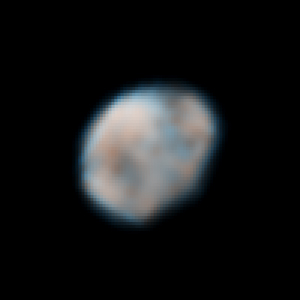
Vesta as seen from the Hubble Space Telescope. (NASA)

There are a few large asteroids in the asteroid belt that need clarification too. Vesta, Pallas, and Hygiea may be classified as dwarf planets when their shapes are better known. My bet is that they will remain asteroids, but for Vesta, a definitive answer will be reached soon. The NASA Dawn mission is orbiting Vesta this year and reach Ceres in 2015. This will provide much needed information on these objects, the largest two in the asteroid belt. (And hopefully I will right an article on both of them soon, as Vesta has become dear to me.)

I took this image of Vesta for my university observational astronomy class.

So there is a basic overlay about asteroids. You can see there are many nuances on this level, and it takes some familiarity to really know about them. There are several different "families" and subgroups, as well as problems with those classifications and how they are determined. But this is all I will leave you with. I hope you learned a lot about asteroids, and you will gain a better understanding on them as more missions are carried out to study them.


Wednesday, April 20, 2011

Astro-Lesson: Gamma Ray Bursts.

First: Good to see that I got some votes out of you all and looks like Gamma-Ray Bursts just barely won. I'll have a new poll up tomorrow I suppose for next weeks Astro-Lesson.

Second: I decided to start calling these things Astro-Lessons because they are little lessons in astronomy that are just supposed to help build a pretty basic understanding of the Universe we live in.

Now onto the lesson:
NASA concept art of a gamma-ray burst


Gamma-Ray Bursts, also known as GRBs, are short-lived bursts of gamma ray photons associated with immense explosions that have been observed in distant galaxies. These are the most luminous electromagnetic events known. They typically last only seconds, but can be milliseconds quick, or even as slow as several minutes. After the burst, there is typically an "afterglow" in longer wavelength (X-ray, ultraviolet, optical, infrared, and radio).

Gamma rays, if you're unfamiliar with them, are a form of electromagnetic radiation at high frequency (very short wavelength) produced by subatomic interactions, such as radioactive decay, fusion, and fission. Gamma rays are a health hazard since they are a form of ionizing radiation, which is what makes GRBs scary.

NOT LIKE THAT...


Imagine, if you will, a microwave so powerful that it would cleanse the entire galaxy of life. It would literally fry everything. That would be the power of a gamma-ray burst in our galaxy.

GRBs are caused by a special type of supernovae, hundred of times brighter then typical ones (astronomers can pick out supernovae in distant galaxies) and a million trillion times brighter then the Sun. There aren't a very common event though, GRBs are detected roughly ONCE PER DAY in any random direction of the sky.

Until recently, astronomers knew very little about GRBs. In fact, their discovery was a bit accidental. During the Cold War in the 1960s, U.S. military satellites were watching for Soviet nuclear weapons testing in violation of the test ban treaty. The satellites carried gamma ray detectors since a nuclear explosion produces gamma rays. But they began noticing these huge gamma ray bursts coming from deep space. These bursts remained a mystery up into the early 90s. There were no indications as to how far away the GRBs were, if they originated at the edge of our solar system, or in the Milky Way, or further away.

Hubble catches a GRB in action.


A combination of satellite observations with ground-based follow-up observations and theoretical work began to unveil one of the biggest mysteries in modern astronomy. It turns out that GRBs occur incredibly far away, near the edge of the observable Universe in distant galaxies. (Though one of my favorite explanations was that GRBs were massive nuclear weapons being used in a galactic war.)

As astronomers began to learn more about GRBs, they began to notice differences in individual events. These differences were in the length of the event, in which there were two classifications: long-duration (longer than 2 seconds) and short-duration (less than 2 seconds). The short-duration ones can last for a few milliseconds though, and average about 0.3 seconds (300 milliseconds). Long-duration bursts can last up to several minutes and average around 30 seconds.

Infographic describing theories on both long and short GRBs.


It is believed that entirely different physical properties cause long and short duration GRBs. The long ones are the ones that astronomers feel confident in their knowledge of. The short GRBs are only theoretically described and remain a mystery. So there isn't much else to say about short-duration GRBs, they exist and their are missions to study them, but the data is so fleeting, it is hard to pinpoint how far away they are or what causes them.

For the long-duration GRBs there is a good amount known. In the 1990s is when astronomer's discovered the "afterglow" which allowed the origin of the GRB to be pinpointed. This "afterglow" pointed to galaxies at immense distances, Billions of light years away. Some of these GRBs first occurred before the Earth, being only 4 billion years old, even existed! The most recent likely happened when the Earth was young, perhaps before the first microbes formed.

The faint smudge of a galaxy in the center of this Hubble image is where a GRB exploded in 1997.


In tracing GRBs back to their origin, astronomers began to study the galaxies that were the source of these explosions. Unfortunately there is no definite answer for what causes a GRB, but they are associated with a special sort of supernova seen in these distant galaxies, dubbed hypernova for their immense size and magnitude. The "smoking gun" that linked the two happened in March 2003 when the afterglow from a GRB perfectly matched the optical spectrum of a supernova in that galaxy.

What causes the supernova and the GRB is the mystery though. It would require an incredibly massive amount of energy, either from a incredibly massive star or a black hole or neutron star. Some of the theories suggest neutron star collisions while others suggest the collapse of massive stars.

But even though gamma-ray bursts seem like scary unpredictable events, we got two things going for us. One, these things have all happened very, very far away where they cannot hurt us, although the closest ones have been known to cause satellite interference. And two, there is no indication that these burst are happening in closer, more modern galaxies.

If GRB's were still common in modern galaxies as we know them, they would occur a lot closer and more often. So there is some sort of point where these events must die off. The idea is kind of that star formation hit a certain limit, perhaps the right mixture of elements and the right temperatures are just not available anymore to create the stars responsible for GRBs. So, we are likely safe from any threat of annihilation by these incredibly violent events.

Further Reading: 
UC Berkeley's website on gamma-ray bursts 


Addendum: I did some more research (actually I watched the 3rd episode of Phil Plait's Bad Universe on Discovery Channel, which coincidentally happened to premiere yesterday [I watched it after I wrote this post]) and it turns out the safe distance things is a bit iffy. We seem pretty safe from gamma-ray bursts, but there is a very extremely small chance that we might get hit, there is no real good way to know. But there is evidence that an extinction event that happened in the past may have been caused by a GRB. I don't know that it's a definitive theory, but it is a plausible one with reactions of the atmosphere and massive extinction.